Academic Excellence Through an Islamic Worldview means the Qur'anic lens is present in every classroom — not just in Islamic Studies. But what does that actually look like?
Core Academic Subjects — College-Prep Rigor
Students still study rigorous academics. The difference is how — learning is connected to authentic experience, real-world application, and Islamic values rather than isolated assignments.
Required courses include: English I–IV · Algebra I, Geometry, Algebra II, Precalculus · Biology, Chemistry, Physics · World History I & II, U.S. History, Government & Economics · Arabic I–IV · Qur'anic Studies I–IV · Islamic Worldview & Leadership I–IV
Electives include: Entrepreneurship · Computer Science · Financial Literacy · Media & Communications · Research Seminar · Psychology · Environmental Studies · AI Literacy
Islamic Core — Going Deeper Than Most Schools
Rather than one generic "Islamic Studies" class, Rahmah House teaches Islamic knowledge as a full intellectual and spiritual tradition. In addition to understanding the Quran, Seerah, and Hadith, students will engage in discussions that promote character and spiritual development.
We ask different questions:
Remembrance of Allah is woven into every day — morning and afternoon adhkar, reflection after salah, weekly Qur'an contemplation circles, and silent reflection periods. The goal is not forced compliance. It is a conscious, living relationship with Allah.
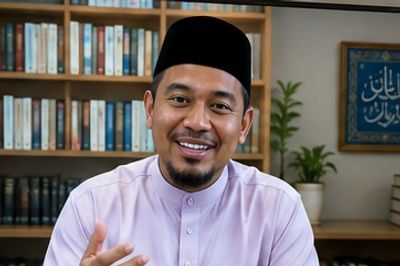
Students study rigorous core academics — the difference is how. Learning is connected to authentic experience, real-world application, and Islamic values rather than isolated assignments.
English I, II, III, IV — including Muslim and global literary voices
Algebra I · Geometry · Algebra II · Precalculus
Statistics · Calculus
Biology · Chemistry · Physics
· Environmental Science/Lab
World History I & II · U.S. History · Government & Economics
Arabic I, II, III, IV — conversational and Qur'anic
Rather than one generic "Islamic Studies" class, Rahmah House treats Islamic education as a full intellectual and spiritual tradition — taught with the depth, honesty, and love it deserves. This is our signature differentiator, and it runs through every part of the school day.
Daily recitation, tajwid, vocabulary, tafsir, and reflection. Students don't just read the Qur'an — they learn to sit with it, understand it, and apply it to their lives.
Students learn how knowledge was preserved — chains of transmission, narrator reliability, and why not every narration carries the same weight. Critical thinking meets deep respect for scholarship.
What is truth? What is purpose? What is success? What is human nature? This is your worldview course — and it runs through everything.
The Seerah as a living leadership manual. How did the Prophet ﷺ resolve conflict? Build community? Lead with mercy? What can we learn and apply today?
Prayer, fasting, halal and haram, worship in practice. Taught with context and wisdom — not as a rulebook, but as a living tradition that makes life richer and more purposeful.
Topics include sincerity (ikhlas), gratitude (shukr), trust in Allah (tawakkul), mercy (rahmah), perseverance (sabr), and purification of the heart (tazkiyah). Students keep reflection journals, gratitude journals, and weekly self-assessments.
Students build real-world competence, not just academic transcripts.
Budgeting, investing, halal wealth-building, and tax preparation — before they need it.
Emotional wellbeing, stress management, and self-awareness — grounded in an Islamic framework.
Purpose, vocation, and direction — discovered early, not as an afterthought in senior year.
How AI works, how to use it effectively, and how to engage it with Islamic ethics and integrity.
Starting and running a business — connected to Islamic principles of stewardship, service, and ethical leadership.
Students explore Islamic artistic and musical traditions through hands-on practice in visual art, calligraphy, and sound. The course builds creativity, discipline, and appreciation for Islamic heritage while developing expressive and technical skills.
The art of Arabic calligraphy through hands-on practice with classical scripts, developing creativity, focus, and craftsmanship while exploring the beauty of Islamic art and the Arabic language.
Students are introduced to the oud, a foundational instrument in Middle Eastern musical tradition. Instruction focuses on basic technique, melody, and expressive playing within classical forms.
Students develop rhythm and coordination through traditional Islamic percussion, with emphasis on the daf. The ensemble explores rhythm as a form of cultural and spiritual expression.
Students develop vocal performance skills through the study and practice of nasheeds and choral singing rooted in Islamic themes. Emphasis is placed on harmony, rhythm, voice control, and meaningful expression.
We use cookies to analyze website traffic and optimize your website experience. By accepting our use of cookies, your data will be aggregated with all other user data.